
Disclosure: Tabilane earns a commission if you book through links on this page, at no extra cost to you. This does not affect our recommendations. See our Affiliate Disclosure for details.
Kinosaki Onsen is built around a single idea: you should be able to walk from one hot spring to the next in wooden sandals, wearing a cotton robe, without getting in a car. The town's 700-meter main street follows a willow-lined canal. Seven public bathhouses sit along it — five open at the moment — at intervals short enough that you can do three baths in an evening and still be in bed by ten. It has worked this way for roughly 1,300 years.
This guide covers the practical side: which bath to visit first, when to go, how to get there from Osaka or Kyoto, and what the crab season actually means for your wallet.
Quick Answer
Kinosaki Onsen is a hot spring town on Japan's Sea of Japan coast in Hyogo Prefecture, about 2 hours 15 minutes from Kyoto by limited express train. Ryokan rates include two meals and unlimited access to every public bath that is open — the town has seven, and five of them are open right now because two are shut for works. The most atmospheric season is November through February, when matsuba crab is served and lantern-lit evenings along the canal are at their best. If budget is a constraint, May through June offers the same baths and same town at rates 30–40% lower.

Photo: 663highland, CC BY 2.5, via Wikimedia Commons — The willow-lined Otani River canal that runs the length of Kinosaki Onsen's main street, the waterway the bath-hopping town is built around.
Getting to Kinosaki from Osaka and Kyoto
From Kyoto: Take the JR Kinosaki (きのさき) limited express from Kyoto Station. The journey runs approximately 2 hours 20 minutes. A reserved-seat ticket costs around ¥5,370 total in regular season (¥2,640 base fare plus a ¥2,730 reserved limited-express fee; roughly ¥200 less off-peak); Japan Rail Pass holders ride at no extra charge, reserved seat included. Trains run several times daily.
From Osaka (Osaka Station): Same JR Kounotori service, approximately 2 hours 45 minutes. The train terminates at Kinosaki Onsen Station — there is no question of missing your stop.
From Tokyo: Shinkansen to Shin-Osaka, then limited express to Kinosaki. Total journey: around 4 hours. This makes Kinosaki a better two-night destination than a day trip from Tokyo.
On arrival: Kinosaki Onsen Station is a three-minute walk from the town center. Most ryokan send a staff member to meet guests at the station platform — confirm this when you book.
A note on the JR Pass: This route rewards pass holders significantly. The Kyoto–Kinosaki Onsen leg on the Kinosaki limited express is fully covered, reserved seat included at no extra charge. If you're traveling on a 7-day or 14-day pass, Kinosaki is one of the better value-per-minute destinations on the entire JR network.
The Seven Public Baths: A Practical Guide
Every guest at a Kinosaki ryokan receives a soto-yu pass — unlimited access to the public bathhouses for the duration of their stay. Note that Sato-no-Yu, the seventh bath, has been closed for a full reconstruction since April 2024; after asbestos was discovered during demolition the rebuild was delayed, with the town now projecting a reopening around 2030. A second bath, Kono-yu, is also closed for a safety renovation until around 30 October 2026, so five of the seven are operating until late October and six after that. Each bath also takes its own weekly closing day, posted at your ryokan's front desk; check it before you head out each evening.
Here is what each bath is actually like, in the order our editors recommend for first-timers:
1. Ichinoi-yu (一の湯) — Start Here
The most visually striking of the seven, with a kabuki-theater façade fronting directly onto the canal. Inside: main bath, outdoor bath, and a cave bath cut into the hillside behind the building. The cave bath is genuinely unusual — low ceilings, mineral steam, rough stone walls — and nothing else in town replicates it. Closed Wednesdays.
2. Goshono-yu (御所の湯) — The Elegant One
Named for imperial family visits, and the interior shows it. A formal indoor garden bath with views onto a stone garden, plus an outdoor rotemburo partially screened by cypress. The best-designed interior of the seven. Closed Thursdays.
3. Kono-yu (鴻の湯) — Oldest Site
The location of the original spring is mentioned in 8th-century records. The building is modern but the outdoor garden bath sits in what feels like the town's oldest corner — a formal garden with a crane sculpture, quiet even at peak hours. Closed Tuesdays. Note: Kono-yu is also closed for a safety renovation until around 30 October 2026, so it cannot be visited before then.
4. Jizo-yu (地蔵湯) — Best After Dark
The approach along the side canal is better in the evening than any other bath in town. Small stone Jizo figures line the entrance path. The bath interior is simple — a single large communal pool — which keeps the atmosphere unpretentious. Closed Mondays.
5. Mandara-yu (まんだら湯) — Medicinal Focus
A modest octagonal-roofed building slightly set back from the main canal street. Waters are calibrated to specific temperatures; the emphasis is on therapeutic bathing rather than aesthetics. Quieter than the three main baths, and one of two baths (with Yanagi-yu) that open only from mid-afternoon (15:00). Closed Wednesdays.
6. Yanagi-yu (柳湯) — Local's Bath
The smallest of the seven, with a single indoor bath in a stripped-back traditional building. Popular with local residents precisely because it lacks the tourist traffic of the other six. Worth a visit on a quieter evening — it opens only from 15:00 — when you want something that feels genuinely neighborhood. Closed Thursdays.
7. Sato-no-Yu (さとの湯) — Currently Closed for Reconstruction
The largest and most modern facility, adjacent to the station — multiple pool types (jet pools, outdoor baths, a sauna), more resort than traditional. Note: Sato-no-Yu has been closed since April 2024 for a complete rebuild, with reopening now projected around 2030, so you can't visit it on a trip today. It's worth knowing about for a future stay, especially if you have children or want the full amenity range in one place — but plan your current visit around the open baths above — five until Kono-yu reopens around 30 October 2026, six after that.
The Yukata Walk: What Actually Happens
Your ryokan provides a yukata (cotton kimono), an obi sash, geta sandals, and a small tote bag for your towel. After check-in, you change into the yukata, put on the geta, and start walking.
The geta take about ten minutes to get used to. The clacking sound they make on stone — unavoidable, rhythmic — becomes the background score of your evening within an hour. You do not feel self-conscious wearing a yukata through town because everyone else is wearing one too. The main street is pedestrianized after 5 PM and almost exclusively people in cotton robes.
The practical sequence most visitors settle into: one bath before dinner (the baths are usually less crowded 4–6 PM), a long kaiseki dinner at your ryokan (1.5–2 hours), then one or two more baths in the evening (peak atmospheric time is 8–9 PM, when the canal lanterns are fully lit and the crowds are manageable).
The distance from one end of the main street to the other is 700 meters. You can walk it in ten minutes. Most people take forty.

Photo: Unsplash
Crab Season: What It Costs and Whether It's Worth It
Matsuba crab — a variety of snow crab (zuwai-gani) harvested from the Sea of Japan — is in season at Kinosaki from November 6 through March 20 each year. These dates are set by Japan's national fishery regulations for the Sea of Japan — established to protect crab stocks — and enforced strictly across the producing prefectures. During this window, virtually every ryokan kaiseki dinner features the crab as its centerpiece.
The cost breakdown: Ryokan rates during crab season run 30–40% higher than off-season. A full matsuba crab course adds approximately ¥8,000–¥15,000 per person to the base rate. At the high end of crab season, a two-night stay for two people at a mid-range ryokan can easily reach ¥120,000–¥150,000 including meals.
What you get: The kaiseki structure during crab season typically includes boiled crab legs, crab sashimi (served raw, briefly, and cold — the texture is dramatically different from cooked), crab shabu-shabu (thin slices swished 4–5 seconds in hot broth), grilled crab, and a closing crab miso soup. The meal takes two hours.
Honest take: The crab is genuinely good. Whether it justifies the price premium depends entirely on how much you enjoy shellfish. If crab is not a particular priority for you, the off-season kaiseki (local sea bream, mountain vegetables, Tajima beef) is excellent and considerably less expensive.
December–January trade-off: Snow occasionally falls during the peak crab months. A light snowfall on the canal lanterns is one of those images that stays with you. This is the version of Kinosaki that tends to appear on Japanese travel posters.
Choosing and Booking a Ryokan
Kinosaki has around 70 ryokan and inns, from large resort-style inns to 8-room family operations. All include two meals and the soto-yu pass.
Price tiers (per person, per night, with two meals):
- ¥15,000–¥22,000: Simpler kaiseki (4–5 courses), shared or smaller private facilities, adequate for a first visit
- ¥22,000–¥40,000: Private in-room bath access, more elaborate kaiseki (8–10 courses), rooms with garden views — the recommended tier for most travelers
- ¥40,000–¥80,000+: Private rotemburo, premium crab courses, top-tier rooms — Nishimuraya Hotel Shogetsutei is the benchmark in this category
Booking platforms: Booking.com covers the larger and mid-tier Kinosaki properties that have invested in English-language guest services. What it does not cover — and this matters in Kinosaki specifically — are the smaller family-run inns that have been operating for two or three generations. These properties have put their energy into the bath quality and the kaiseki, not into managing foreign booking infrastructure. They list on domestic Japanese platforms. Search Kinosaki Ryokan on Rakuten Travel Japan to see the full picture, including properties that will never appear on an international platform. Japanese-language site; Chrome Translate handles the booking flow. For a platform comparison and booking tips, see the ryokan booking platforms guide. Affiliate link.
Timing: Crab season (November–February) and cherry blossom (late March–early April) book out 2–3 months in advance. Other periods: 4–6 weeks ahead is usually sufficient.
Two well-reviewed picks on Rakuten Travel — the kind that don't appear on Booking.com:
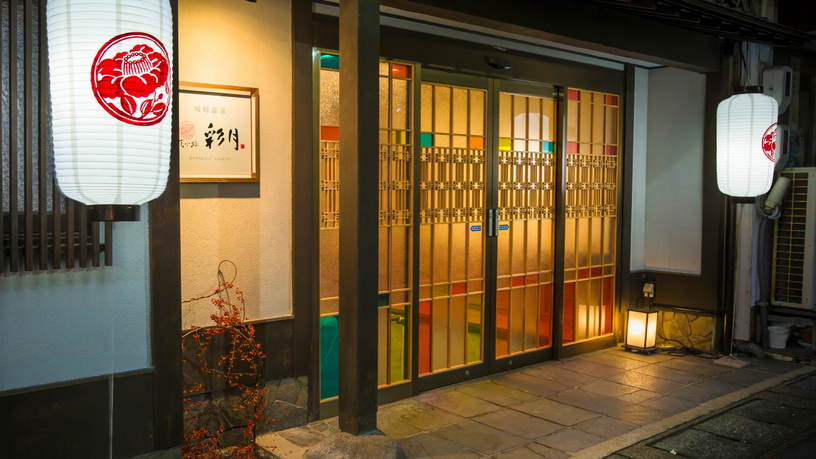
花小路 彩月 (Hanakoji Satsuki) ★4.66/5 · 212 reviews — Adults-only inn with a private outdoor rotemburo for each room. Quiet end of the main street. Affiliate link.
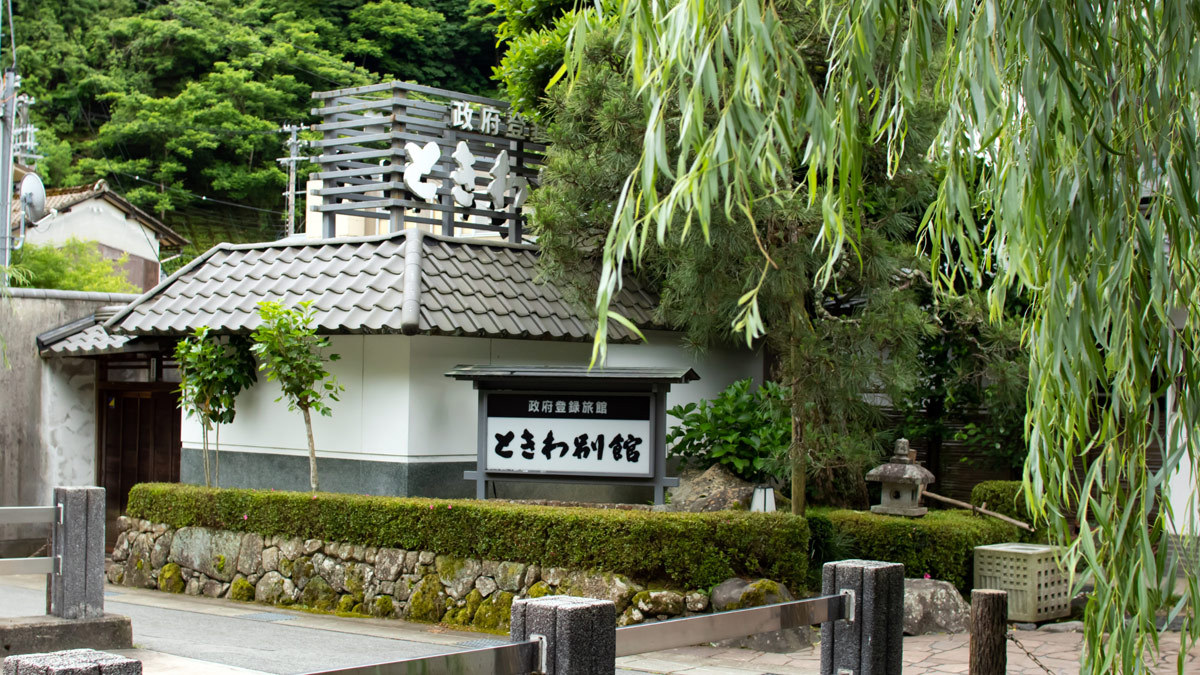
ときわ別館 (Tokiwa Bekkan) ★4.68/5 · 199 reviews — Three-generation family-run inn; meals served in-room; outdoor rotemburo. The authentic mid-range Kinosaki experience. Affiliate link.
Search Kinosaki Onsen ryokan on Agoda — English interface, free cancellation options.

Photo: Asturio Cantabrio, CC BY-SA 4.0, via Wikimedia Commons — Kinosaki Onsen's canal under winter snow, the version of the town that appears on Japanese travel posters during crab season.
Beyond the Baths
Onsenji Temple: The hillside temple historically credited with discovering the springs. Access by ropeway (¥570 round trip to the mid-station temple stop, ¥910 to the summit; about a 4-minute ride). The view down the main canal street from the temple grounds is best at dusk.
Genbudo Caves: 10 minutes by bus from the station. Basalt lava caves formed 1.6 million years ago, dramatic inside. ¥500 admission. A good morning activity before afternoon bathing.
The canal walk at dawn: Most visitors are still asleep at 6:30 AM. The canal at this hour — willow branches trailing in the water, a few elderly locals on their morning walk, the lanterns off but the mist still on the water — is better than anything you'll see in the evening crowds.
Practical Information
| Detail | Info |
|---|---|
| Location | Toyooka City, Hyogo Prefecture |
| Access from Kyoto | ~2h 20m, JR Kinosaki limited express |
| Access from Osaka | ~2h 45m, JR Kounotori limited express |
| Ryokan price range | ¥15,000–¥80,000+ per person (2 meals included) |
| Public baths | 7 soto-yu baths; five operating until Kono-yu's renovation ends around 30 Oct 2026, six after (Sato-no-yu closed since 2024), each shut one weekday — check which are open the day you go |
| Soto-yu pass | Provided by all ryokan; covers unlimited entry for stay duration |
| Crab season | November 6 – March 20 |
| Best value period | May–June, late September–October |
| Cash | Carry at least ¥20,000 for incidentals; some smaller shops cash-only |
Frequently Asked Questions
How many days do I need in Kinosaki Onsen?
Two nights is ideal. One night gives you time for two or three baths and one kaiseki dinner; you'll leave before you've settled into the pace. Two nights lets you do all the open baths at a genuinely relaxed pace — mornings at the temple or caves, afternoons resting, evenings bathing — and you'll wake up on your second morning feeling like you actually belong there.
Can I do Kinosaki as a day trip?
Technically yes. Day visitors can buy an all-day external-bath pass (Yumepa) for unlimited entry to the open baths at ¥1,500 (¥750 for children), or a single-bath ticket for ¥800 (¥400 for children) — the pass is the better value once you do two or more baths. But without the ryokan, you won't have a yukata, geta, or the kaiseki dinner — which together make up most of what Kinosaki is. A day trip shows you the street. A ryokan stay gives you the experience.
Are tattoos allowed in Kinosaki's public baths?
The soto-yu baths follow traditional Japanese onsen rules: visible tattoos are generally not permitted. Some ryokan private baths are more flexible; ask your inn directly when booking. Kinosaki town has discussed more inclusive policies, but as of 2026 the public baths remain restrictive.
Is Kinosaki worth it compared to Hakone?
They are different experiences. Hakone is closer to Tokyo and offers more day-use options without a ryokan booking — see the Hakone day trip onsen guide for that comparison. Kinosaki requires a ryokan stay to work properly, but delivers something Hakone doesn't: an entire town organized around the bath-hop ritual, with seven genuinely distinct public baths — five of them open while the other two are under works — and a main street where no one is dressed in anything other than a yukata.
What is the best time of year for Kinosaki?
November and December for the combination of crab season and the possibility of light snow. Late March to early April for cherry blossoms reflected in the canal. May through June for lower prices and smaller crowds with the same baths. There is no bad season; summer is the weakest simply because the outdoor atmosphere of the canal is less dramatic without cherry blossoms, autumn foliage, or snow.
My Honest Take
The thing about Kinosaki is that it delivers exactly what it promises, which is rarer than it sounds in Japanese tourism. You arrive, change into a yukata, walk between hot springs in wooden sandals, eat crab, and go to bed. The town has been organized around this sequence for more than a millennium. The lanterns on the canal are not a simulation of atmosphere — they are the atmosphere, running continuously, regardless of how many tourists showed up that week.
For a detailed breakdown of the full Kinosaki experience including ryokan selection criteria and seasonal considerations, see the complete Kinosaki Onsen guide.
The only failure mode is booking one night instead of two. Don't do that.
Book your Kinosaki Onsen stay on Agoda · Search on Rakuten Travel (affiliate)
Browse Kinosaki Onsen Tours and Day Experiences on GetYourGuide — guided tours, kaiseki cooking classes, and onsen access packages available in English.