
Disclosure: Tabilane earns a commission if you book through links on this page, at no extra cost to you. This does not affect our recommendations. See our Affiliate Disclosure for details.
Here is what the Tohoku region gives you that Kyoto can no longer reliably provide: a historic pine-island bay where you might be the only foreigner on the boat; a samurai district in cherry blossom season where the crowds are Japanese domestic tourists, not international ones; a mountain gorge in autumn where the only sounds are water and leaves; onsen villages with snow so heavy it bends the fir trees into white sculptures.
Tohoku — the six prefectures that make up Japan's northeast — has been the country's most quietly spectacular travel region for decades. It is not undiscovered by Japanese travelers. But for international visitors still routing reflexively through Kyoto, Osaka, and Tokyo, it represents something increasingly rare: Japan as it was before the bus tours arrived in force. Japan's record inbound numbers show just how concentrated that pressure has become on the classic Kyoto–Osaka–Tokyo route — and how little of it reaches the north.
That is changing. The "under-tourism" travel movement of 2025–2026 has sent a first wave of internationally-minded visitors into Tohoku. The train infrastructure is excellent; the Tohoku Shinkansen connects Tokyo to Sendai in 90 minutes and to Shin-Aomori in 3 hours. This is no longer remote or difficult. It is simply overlooked.
Quick Answer
Tohoku is Japan's northeastern region, comprising Miyagi, Iwate, Aomori, Akita, Yamagata, and Fukushima prefectures. The main draw for international travelers: Matsushima bay (one of Japan's three canonical scenic views), Yamadera mountain temple complex, Kakunodate samurai district, Zao Onsen and its "snow monsters" (ice-covered fir trees), and Oirase Gorge in Aomori. Accessible by Tohoku Shinkansen from Tokyo. Best seasons are spring (late April–early May) for cherry blossoms and autumn (mid-October–mid-November) for foliage. Winter (January–March) offers extraordinary snow scenery and excellent skiing.
Why Tohoku Instead of Kyoto
The honest answer is not that Kyoto is bad. Kyoto is extraordinary. The honest answer is that Kyoto at peak season has become a logistical problem first and a travel experience second.
In April 2026, Fushimi Inari — historically the single best reason to get up at 4 AM in Japan — had queue management barriers in place by 7:30 AM on weekdays. Arashiyama's bamboo grove required a timed-entry ticket during Golden Week. These are not conditions in which the contemplative dimensions of historic Japanese places can function.
Tohoku's equivalents — Yamadera's 1,015 stone steps through ancient cedar forest, Matsushima's 260 pine-covered islands, Kakunodate's intact samurai residence district — have not yet crossed that threshold. They are busy on Japanese national holidays. They are not yet managed like theme parks.
Additionally, Tohoku's four distinct seasons are more dramatic than those of central Honshu. Cherry blossoms at Kakunodate bloom later (late April) and last longer at altitude than Kyoto's early April peak — the south-to-north sakura wave that lets a well-timed trip catch the blossoms in the north weeks after the cities have finished. Autumn foliage in Oirase Gorge runs through early November, weeks after Kyoto's maple season peaks. Winter snows are genuine.

Photo: Unsplash
The Five Places to Anchor Your Tohoku Itinerary
1. Matsushima, Miyagi — The Bay of 260 Islands
Matsushima is one of the Nihon Sankei — Japan's three canonical scenic views, the list formalized in the 17th century. The bay contains 260 pine-topped islands of varying sizes, from house-sized rock formations to larger islands with walking trails. The standard approach is a 50-minute sightseeing cruise departing from Matsushima Kaigan pier (¥1,500; boats run every 40 minutes from 8 AM).
The temples matter too. Zuiganji — a Zen temple founded in 828 AD as a Tendai monastery (it became Rinzai Zen in the Kamakura period), its present main hall rebuilt by Date Masamune in 1609 — sits a 5-minute walk from the pier. The cave hermitages carved directly into the cliff face along the approach path are the most unusual feature: medieval monks lived in these stone alcoves for months at a time.
Access: About 40 minutes by local train from Sendai Station on the Senseki Line to Matsushima-Kaigan (¥420 one-way). Sendai is 90 minutes from Tokyo by Tohoku Shinkansen.
How long to spend: Most visitors do Matsushima as a half-day from Sendai. A full day allows for both the cruise and the main temples. There is decent accommodation in town if you want to be there for the dawn — our full Matsushima Bay guide covers the cruise routes, Zuiganji's cave hermitages, and the dawn timing in detail.
The dawn secret: The bay at 5:30 AM, before the cruise boats start running, is a different place from what tour buses see. Egrets fishing from the stone bridges. Pine silhouettes in morning mist. One local fisherman's boat crossing the frame.
2. Yamadera, Yamagata — The Mountain of 1,015 Steps
Yamadera — literally "mountain temple," the informal name for Risshakuji Temple — sits partway up a granite mountainside in Yamagata Prefecture. The climb involves 1,015 stone steps through ancient cedar forest, past carved stone lanterns, past small sub-temples built into rock faces, to a series of viewpoints where the Yamadera valley unfolds below in a way that has no equivalent in any flat-terrain temple complex.
The Matsuo Basho poem written here in 1689 — shizukasa ya / iwa ni shimiiru / semi no koe ("the silence — / seeping into the rocks, / the cry of cicadas") — is one of the most famous haiku in Japanese literature. Basho came specifically because the place had already been considered spiritually distinctive for 700 years before he arrived.
Access: 17 minutes by local train from Yamagata Station on the Senzan Line (¥240). Yamagata is accessible from Sendai in 1 hour by Yamagata Shinkansen or local train.
Time required: The climb takes 20–30 minutes at a moderate pace; coming down another 20. Allow 2–3 hours total to stop at the viewpoints and not rush.
The one thing to know: The steps are uneven and some sections are steep. Wear actual shoes. The number of visitors who attempt this in sandals and come back down early is significant.
Best season: Autumn (October–November) for foliage visible from the upper viewpoints. Cherry blossom season (late April) for the lower garden areas. Winter access is possible but the upper sections become icy.
3. Kakunodate, Akita — The Samurai Town That Time Partially Missed
Kakunodate is a 17th-century castle town with one of Japan's best-preserved samurai residence districts. Six of the original samurai family compounds survive in the preserved quarter; two are open for paid interior visits and the rest are viewable from the street. The main street — Bukeyashiki-dori — is lined with black-fenced compounds and large weeping cherry trees, the latter planted generations ago by the samurai families.
In late April, when the weeping cherry trees are at peak blossom — typically April 23–30, though varying by year — Kakunodate becomes the destination that photographers and literature-inclined travelers tend to describe in capital letters. The combination of samurai architecture and pink cherry blossoms reflected in the black fences is genuinely as striking as it sounds. Japanese domestic tourism to Kakunodate in late April is substantial; international tourism remains light.
The craftwork tradition is worth mentioning: Kakunodate is the source of kabazaiku — decorative ware made from wild cherry bark, a craft practiced here exclusively for over 200 years. The tourist information office on the main street has examples, and several workshops are open for visitors.
Access: Kakunodate is on the Akita Shinkansen line — about 3 hours from Tokyo, or 45 minutes from Akita City. Direct shinkansen from Tokyo to Kakunodate runs via Morioka.
Time required: The samurai district is fully walkable in 2–3 hours. Cherry blossom season warrants a full day; off-season, a half-day is sufficient before moving on. Our Kakunodate samurai district guide maps the open family compounds and the weeping-cherry timing in late April.
4. Zao Onsen, Yamagata — Japan's Best Winter Landscape
Zao Onsen is a ski resort and hot spring village at approximately 880 meters elevation, 45 minutes by bus from Yamagata Station. In standard conditions this would make it one of dozens of adequate Japanese ski areas. What separates Zao is the juhyo phenomenon.
Between late January and late February, the Zao ropeway summit area at 1,660 meters sees temperatures drop to -15°C or below while clouds roll in from the Sea of Japan carrying moisture. The native Abies mariesii fir trees — already dense and conical at this altitude — accumulate layers of ice and wind-driven snow until they are encased entirely in white. The result is a forest of what look like enormous white creatures frozen mid-movement on a snowfield. The local name translates to "snow monsters."
The ropeway runs regularly (about ¥4,400 round trip from base to summit); the summit is accessible even without skiing. The monsters are visible from the gondola cars on the ascent and more dramatically on foot from the summit viewing area.
The onsen village itself is a functional hot spring resort with accommodation ranging from budget guesthouses to larger ryokan. The spring water at Zao is strongly acidic — pH around 1.5, among the most acidic in Japan — which is unusual even by Japanese onsen standards and gives the water a slightly milky yellow tint.
Access: Yamagata Shinkansen from Tokyo to Yamagata (approximately 2 hours 40 minutes), then bus to Zao Onsen (about 40 minutes, roughly ¥1,200).
Season: Juhyo peak is typically mid-January through late February. The resort operates for skiing through late March. Off-season, the hot springs remain open year-round; the mountain is accessible for hiking in summer and autumn. See the dedicated Zao Onsen snow monsters guide for ropeway timing and the juhyo viewing logistics.

Photo: Unsplash
5. Oirase Gorge, Aomori — The Forest Stream Walk
Oirase Gorge is a 14-kilometer walking trail along the Oirase River in Towada-Hachimantai National Park, Aomori Prefecture. The river runs from Lake Towada through a narrow valley where the forest — primarily oak, maple, and beech — grows to the water's edge and beyond. The trail stays level, following the river on a well-maintained path.
The characteristic feature is not the trail itself but the 14 registered waterfalls along its length, most of which feed directly into the river from the surrounding cliff faces. In autumn, when the maple and beech canopy turns, the gorge functions as a narrow corridor of red and yellow with water running through it and moss covering every available rock surface.
On a weekday in mid-October, reached by bus from Towada-Minami Station, the entire 14-kilometer trail may hold only a few dozen walkers across a five-hour crossing. That number climbs at peak autumn weekends, but it is a useful benchmark for what "busy" means in Oirase relative to Arashiyama or the Philosopher's Path in Kyoto.
Access: From Shin-Aomori Station (Tohoku Shinkansen terminus, 3 hours from Tokyo), bus to Towada-ko via the JR Bus Tohoku Oirase-ko line (approximately 2.5 hours). The bus stops at multiple points along the gorge trail. An easier option: base yourself in Aomori City and take an organized day tour (available from major travel desks in Aomori).
Time required: The full 14-kilometer trail takes 4–5 hours walking at a relaxed pace. Most visitors do 5–8 kilometers of the best-waterfalled section.
Best season: Mid-October to early November for autumn foliage. The gorge is beautiful in summer (deep green, full waterfalls) and in early spring (snow melt creates the most powerful waterfall flow), but autumn is the peak. Our full Oirase Gorge stream-walk guide breaks down the trail sections, the registered waterfalls, and bus access from Aomori.

Photo: Unsplash
Getting Around Tohoku: The Shinkansen Logic
The Tohoku Shinkansen runs from Tokyo (Ueno Station) to Shin-Aomori in 3 hours 10 minutes at its fastest. This is the spine of Tohoku travel. Most of the region's main destinations are within 30–60 minutes of a shinkansen stop by local train or bus.
The Japan Rail Pass calculus: Tohoku rewards rail pass holders more than almost any other region. A 7-day ordinary pass covers the full shinkansen network, and what it costs depends on the channel you buy from: an Exchange Order from an overseas JR-designated agency is ¥50,000 for purchases made through September 30, 2026 and ¥53,000 from October 1, 2026, while the Official Japan Rail Pass Website's own online price table still showed ¥50,000 with no date condition attached when we checked it on October 1, 2026 — the day the increase took effect on the overseas channel. The Tohoku Shinkansen alone — Tokyo to Shin-Aomori and back — costs around ¥30,000 in full-fare tickets. Add an Akita Shinkansen detour to Kakunodate and you're already near pass value before counting local trains. (Confirm the rate on the channel you are actually buying from — our JR Pass price increase guide sets out what the October 1, 2026 revision does and does not affect.)
Base cities that work:
- Sendai: Best base for Matsushima (about 40 minutes), Yamadera (1 hour), and as a hub for further north.
- Morioka: Access point for Kakunodate (45 minutes), northern coastal routes (the Iwate coast is excellent), and the transition to Aomori Prefecture. The Morioka city guide covers using the city as a relaxed northern Tohoku base.
- Yamagata: For Yamadera (17 minutes), Zao Onsen (45 minutes by bus), and access to the Dewa Sanzan mountain shrines.
- Aomori City: Gateway to Oirase Gorge, Hirosaki (for Japan's best moat-sakura in late April–early May), and Nebuta Museum (the most spectacular display of Japan's giant lantern festival tradition).
Renting a car: Practical in Aomori Prefecture where bus frequency drops. The coastal Rikuzen-kaigan area (Iwate/Miyagi) is best by car. Reservations through international platforms (Toyota Rent a Car accepts overseas licenses) are straightforward.
Best Seasons for Tohoku
Late April – Early May (cherry blossoms): Kakunodate weeping cherry (typically April 23–30) and Hirosaki Castle moat sakura (late April to early May) are the marquee events. Japanese domestic tourism is at its highest during Golden Week (late April–early May); book accommodation 3–4 months ahead for this period.
Mid-October – Mid-November (autumn foliage): The best overall travel window. Oirase Gorge, Yamadera, and the mountain areas around Zao turn sequentially. Crowds are lighter than cherry blossom season, weather is stable and cool, and the light quality for photography is excellent. This is the period we'd recommend to first-time Tohoku visitors.
January – Late February (snow): Zao's juhyo phenomenon peaks here. Tohoku's coastal and mountain areas receive heavy snowfall. The Yokote Kamakura Festival (Akita, mid-February) involves hundreds of snow igloo lanterns lit at night — one of the least-photographed spectacular events in Japan. Check the dates before booking: they moved in 2026. The kamakura nights ran on 15–16 February for centuries, and most guidebooks and travel sites still print those dates. From 2026 the organisers shifted them to the Friday and Saturday before the Bonten rite — the second Friday and Saturday of February through 2029, as a trial — which put the 2026 kamakura on 13–14 February. Bonten itself is a religious observance and keeps its fixed dates (16–17 February). Confirm the current year with the Yokote City Tourism Association rather than assuming the old fixed dates. Snow adds logistical complexity (some mountain roads close) but the visual reward is disproportionate.
June – August (summer): The Tohoku summer festival season is underrated internationally. The Tanabata Matsuri in Sendai (August 6–8) involves enormous paper streamers (one of the largest traditional festivals in Japan). Aomori Nebuta Festival (August 2–7) features massive illuminated lantern floats and genuinely chaotic street dancing. Hot and humid in the lowland cities; cool and excellent for hiking in the mountains. If you are planning a trip specifically around the summer heat, our quiet summer in Japan guide sets out how this cooler north fits the wider escape-the-crowds strategy.
Where to Stay in Tohoku
Sendai: Large city with full hotel range. The ANA Crowne Plaza Sendai (business district) and Richmond Hotel Sendai Ichibancho (central, excellent value) are reliable choices for international travelers. Sendai also has a growing selection of boutique hotels in renovated machiya townhouses.
Kakunodate: Small town; accommodation options are limited. The Tamachi Bukeyashiki Hotel — built within a traditional samurai compound — is the most atmospheric choice and books out months ahead during cherry blossom season. Budget guesthouses near the station are the alternative.
Yamagata / Zao Onsen: The Zao Onsen village has multiple ryokan with access to the acidic spring waters. Takamiya Hotel Azumaso is a large mid-range option with excellent indoor/outdoor baths. For non-onsen travelers, Yamagata City has standard business hotels.
Aomori: Aomori City's JR East Hotel (connected to the shinkansen station) is the functional base for Oirase and Hirosaki day trips. For something more atmospheric, Hirosaki has small traditional inns within walking distance of the castle.
Book Sendai:
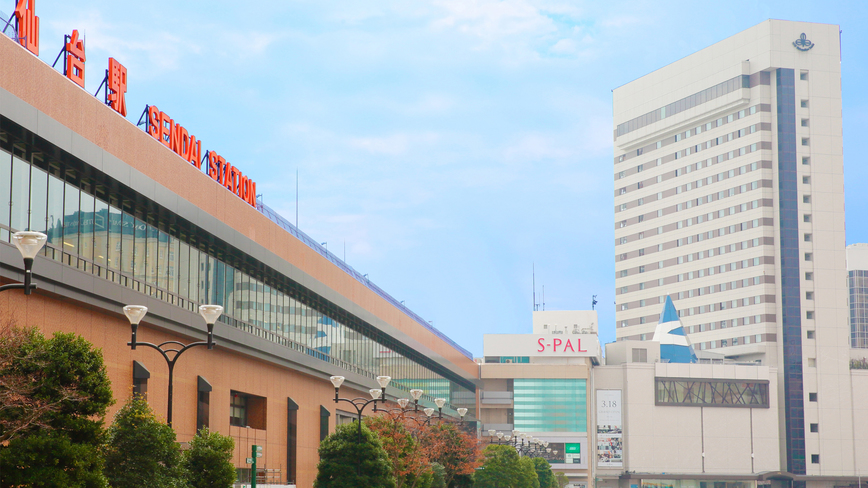
Hotel Metropolitan Sendai ★4.43/5 · 4,052 reviews — One minute on foot from Sendai Station's west exit; the reliable base for Tohoku exploration. Japanese-language site; Chrome Translate handles booking. Affiliate link.
Book Zao Onsen:
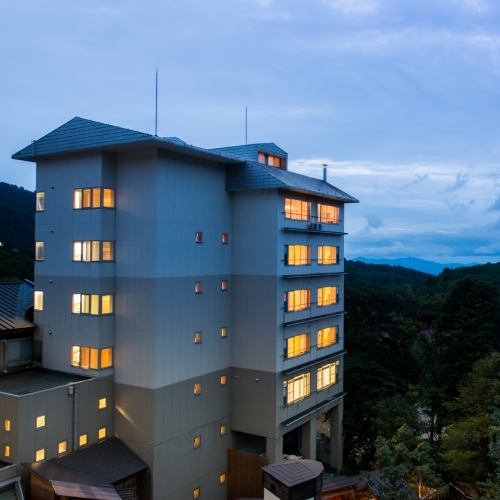
Zao Onsen Lucent Takamiya ★4.14/5 · 1,332 reviews — Central Zao Onsen village; large indoor/outdoor baths with volcanic spring water. The recommended base for juhyo season (January–February). Affiliate link.
Tohoku and the "Slow Japan" Argument
There is a version of travel to Japan that optimizes for checking things off: Fushimi Inari, Arashiyama, Kinkakuji, Sensoji, done. This works. These places are extraordinary. But the conditions they operate under increasingly require managing logistics rather than experiencing places.
Tohoku runs on a different rhythm. The shinkansen is fast; once you're there, things slow down. Yamadera has 1,015 steps and no timed entry. Oirase Gorge is 14 kilometers of walking path with no queue. Kakunodate's samurai district closes nothing, charges nothing at the gate, and requires only that you show up and look.
For travelers who have done the Kyoto circuit once and want something that feels like actual Japan — not the infrastructure built around tourists experiencing Japan — Tohoku is where that search ends. For first-timers who are willing to trust the shinkansen and deviate from the default itinerary, the reward is disproportionate to the planning effort required.
The standard counter-argument is that Tohoku "doesn't have enough." It's true that Kyoto's density of historic sites per square kilometer is unmatched. But Tohoku's dispersed itinerary has a different quality: you are moving through a living region, not a preserved one.
Frequently Asked Questions
Is Tohoku safe for international travelers?
Yes. Tohoku's infrastructure for international visitors has improved significantly since the 2011 earthquake and reconstruction period. English signage is good at major shinkansen stations and tourist sites. The region is one of Japan's safest, with essentially no tourist-targeting crime.
Do I need to speak Japanese to travel in Tohoku?
Less than you'd expect. Major tourist facilities have English-speaking staff; Google Translate handles menus and signage comfortably. Rural areas (Oirase Gorge transit, local bus routes) have less English, but this is where downloaded offline maps and translation apps pay off. The challenge is lower than rural Kyushu or the Japan Alps region.
How does Tohoku fit into a Japan itinerary?
Most efficiently as an add-on to a Tokyo base. A 4–5 day Tohoku segment appended to a longer Japan trip covers Sendai, Matsushima, Yamadera, and one additional destination comfortably. For dedicated Tohoku travel, 7–10 days covers the main itinerary with some breathing room. The region pairs naturally with Nikko (south) as a northern extension, though they require different logistics.
What's worth seeing in southern Tohoku, closer to Tokyo?
The five anchors above skew toward central and northern Tohoku, but the region's southern gateway — Fukushima Prefecture, the first you cross heading north from Tokyo — is worth a stop of its own. The standout is Ouchi-juku, a former Edo-period post town in the Aizu area whose main street is lined with thatched-roof houses; in February it hosts a snow-lantern festival that is one of the most photographed winter scenes in Japan. It makes a natural half-day break for travelers heading into Aizu by local train or car rather than riding the shinkansen straight through to Sendai.
Is Tohoku more expensive than Kyoto?
Generally less expensive. Accommodation in Tohoku cities and towns runs cheaper than Kyoto equivalents at equivalent quality levels. Onsen ryokan in Yamagata and Akita are priced below comparable facilities in Hakone or Kinosaki. The main cost variable is the shinkansen; a Japan Rail Pass significantly reduces this for visitors covering multiple regions. To see how a regional itinerary compares against Japan's national averages for lodging, rail, food, and daily spending, see our Japan travel cost statistics.
What makes the Dewa Sanzan worth including?
The three mountains of Yamagata Prefecture — Haguro-san, Gassan, and Yudono-san — form Japan's most important mountain pilgrimage site outside the Kumano Kodo. Haguro-san's 2,446-step stone stairway through cedar forest — passing a National Treasure five-story pagoda near the base and ending at the thatched-roofed summit shrine hall (Sanjin Gosaiden) — is one of those experiences that resists description and tends to be the highlight of a Tohoku trip for spiritually-oriented travelers. Worth adding a half-day to a Yamagata itinerary.
What about Hiraizumi, Tohoku's World Heritage site?
Hiraizumi, in southern Iwate, is the region's only UNESCO World Heritage Site and the most direct rebuttal to the idea that Tohoku lacks historic depth. Nine centuries ago the Northern Fujiwara clan ruled the north from here and spent the region's gold building temples meant to recreate the Buddhist Pure Land on earth — contemporaries called it "the Heian-kyo of the north." The survivor that justifies the trip is Chusonji's Konjikido, a small hall completed in 1124 and covered entirely in gold leaf, paired with Motsuji's preserved pure-land garden. Best of all, it sits directly on the shinkansen spine: roughly an hour from Sendai via Ichinoseki, which makes it an easy half-day between Sendai and Morioka rather than a detour. See the full Hiraizumi and Chusonji guide for fees, hours, and a one-day itinerary.
My Honest Take
Kyoto rewards a fourteenth visit as readily as a first. Tohoku answers a different need: somewhere that feels less like consuming a managed version of Japan and more like simply being in Japan.
The distinction matters most at Yamadera at 7 AM in late October, when the valley mist hasn't burned off and there are six other people on the 1,015 steps. Or at Kakunodate's weeping cherry trees in the evening when the tour buses have left and a local grandmother is sweeping the stone path in front of her family's 350-year-old gate. Or at Oirase on a weekday, when the forest is loud with falling water and completely quiet of human noise.
Tohoku is not a secret. It is simply a place that requires slightly more intention than following the standard Tokyo–Kyoto–Osaka track. That intention is repaid in full.
For travelers building their first Japan trip, the foundational experiences start in Tokyo and Kyoto — see the early morning Arashiyama guide for the best version of that classic. For those returning, or for those willing to trust that the shinkansen will carry them somewhere extraordinary, Tohoku is where the next chapter of Japan travel is being written.
Search Tohoku accommodation on Rakuten Travel — the most complete inventory for the region, including ryokan in smaller towns like Kakunodate and Yamadera that don't appear on international platforms. Affiliate link.
Browse Tohoku Tours and Guided Experiences on GetYourGuide — day trips from Sendai, Matsushima bay cruises, and Yamadera hiking tours in English.