
Disclosure: Tabilane earns a commission if you book through links on this page, at no extra cost to you. This does not affect our recommendations. See our Affiliate Disclosure for details.
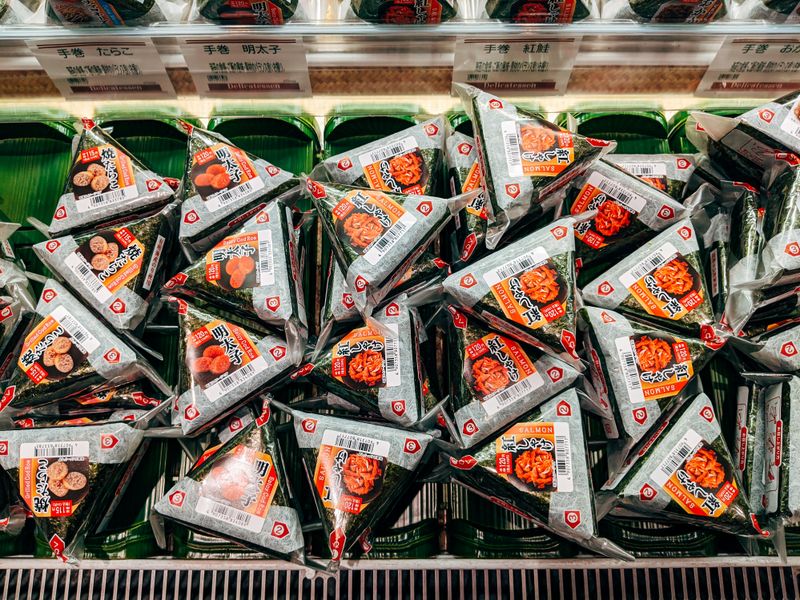 Photo: Markus Winkler / Pexels
Quick Answer — The Most Common Onigiri Types in Japan
If you're standing in a Japanese convenience store right now and need to choose without reading 2,000 words, here's the functional guide:
| Filling (Japanese) | Filling (English) | Flavor Profile | Which Chain — and on What Basis |
|---|---|---|---|
| ツナマヨ (Tuna Mayo) | Tuna + mayonnaise | Rich, savory, mild | Lawson — lowest hand-wrapped price |
| 鮭 (Sake) | Grilled salmon | Lightly salted, savory | 7-Eleven — lowest listed price |
| 梅 (Ume) | Pickled plum | Sour, salty, sharp | No objective difference |
| 昆布 (Konbu) | Simmered kelp | Savory, slightly sweet | 7-Eleven — lowest listed price |
| 明太子 (Mentaiko) | Spicy pollock roe | Spicy, briny, complex | No objective difference |
| おかか (Okaka) | Bonito flakes + soy | Smoky, savory, light | No objective difference |
| 高菜 (Takana) | Pickled mustard greens | Tangy, crunchy | No objective difference |
| いくら (Ikura) | Salmon roe | Rich, oceanic, premium | No objective difference |
| えびマヨ (Ebi Mayo) | Shrimp + mayonnaise | Mild, sweet, creamy | No objective difference |
| 焼きたらこ (Yaki Tarako) | Broiled cod roe | Slightly smoky, savory | No objective difference |
Prices below were checked against the three chains' own product pages in September 2026; konbini pricing moves once or twice a year, so treat them as a current snapshot rather than a fixed menu. The plainest onigiri — salt, pickled radish and bonito, wakame rice — starts at ¥146 at 7-Eleven and ¥149 at Lawson and FamilyMart. The filled everyday varieties most visitors actually buy sit between ¥181 and ¥235, and the premium lines top out around ¥322. Tuna mayo and salmon are the two most stocked fillings at every chain.
About the last column. Where it names a chain, the basis is list price and nothing else. A February 2026 survey of the three chains' standard direct-wrapped onigiri put 7-Eleven lowest on konbu (¥178 vs ¥184 at Lawson and ¥198 at FamilyMart) and on salmon (¥213 / ¥221 / ¥235) — source. Tuna mayo is the one row where the format matters: 7-Eleven is lowest on the direct-wrapped piece (¥178), but among the hand-wrapped versions priced further down this page, Lawson's ¥181 is the cheapest. Every other row says No objective difference, because the only thing that would separate those fillings is taste, and we are not going to hand you a ranking we cannot show our work for. For the wider chain-by-chain breakdown, see our konbini comparison.
The Flavor Profile column describes what the filling is made of — tuna with Japanese mayonnaise reads rich, salt-pickled plum reads sour — not how any one chain's version came out.
What Is Onigiri? A Brief Foundation
Onigiri (おにぎり) — sometimes called omusubi (おむすび) in western Japan — is a hand-formed rice ball made from plain, lightly salted Japanese short-grain rice (usually uruchimai, the same variety used for everyday table rice). The rice is shaped into a triangle, oval, or cylinder, then typically wrapped in nori (dried seaweed) to provide a grip surface and flavor contrast.
The filling sits in the center of the rice. The nori is usually packaged separately and applied by the consumer just before eating — this preserves its crunch, which degrades if it contacts the rice for too long. Japanese convenience stores — now 56,054 of them nationwide — developed the three-strip packaging system in the 1970s specifically to solve the soggy-nori problem, and it's one of those quiet design achievements that visitors notice without realizing it's intentional.
Onigiri is not sushi. The rice is not seasoned with vinegar (sushi rice uses su-meshi, vinegared rice). The two products share a base ingredient but are different foods with different flavors, preparation methods, and contexts. Onigiri is everyday food. Sushi is a restaurant food with ceremonial weight — though its most budget-friendly, family-friendly form, conveyor-belt sushi, strips most of that ceremony away. Convenience stores do sell their own pre-packaged sushi as well — we put the major chains' versions to the test in a dedicated konbini sushi review — but it sits on a different shelf, and in a different place in daily life, than the humble rice ball.
The Standard Fillings — What You'll Find Everywhere
Tuna Mayo (ツナマヨ)
The most popular konbini onigiri filling by sales volume. A mix of canned tuna, Kewpie brand Japanese mayonnaise (richer and slightly sweeter than Western mayo due to the use of only egg yolks and rice vinegar), and a small amount of seasoning. Mayonnaise and canned tuna are the whole story here — there is nothing in the filling that will surprise a first-time eater.
7-Eleven's hand-wrapped ツナマヨネーズ is ¥197 and appears on the board in most of the country; the chain also runs larger soy-wrapped tuna formats (a ¥268 shoyu-wrapped piece, a ¥181 Sea Chicken shoyu piece), but which of these you see depends on the region — 7-Eleven publishes a separate product board for each of eleven regions and the tuna lineup is not identical across them. Lawson's hand-wrapped シーチキン®マヨネーズ (¥181) is the cheapest of the three and carries the Sea Chicken brand name on the label. FamilyMart's 和風ツナマヨネーズ (¥185) sits between them on price; the 和風 prefix means it is seasoned with soy and dashi rather than mayonnaise alone, which is the one real difference between the three versions.
Tuna mayo is the correct starting point if you have never eaten a Japanese konbini onigiri before.
Grilled Salmon (焼き鮭, Yaki Sake)
The second most common filling. Flaked grilled salmon — lightly salted, occasionally with a small amount of mirin — distributed throughout the center of the rice. The flavor is clean and savory without the richness of tuna mayo.
Salmon onigiri is not the budget pick it once was — 7-Eleven's charcoal-grilled 紅しゃけ (beni-shake) onigiri is ¥214, the same price as its 辛子明太子 and a clear step above the ¥181 it charges for the plainest filled piece. Lawson's 炙り熟成紅鮭 is ¥221 and FamilyMart's hand-wrapped 紅しゃけ is ¥235. It's still the more neutral option in flavor: appropriate for people who find mayo-based fillings too rich, or for a morning meal when something lighter is appropriate. It's also the more kid-friendly option.
Pickled Plum (梅, Ume)
The oldest filling on this list, with historical roots in bento culture that predate convenience stores by several centuries. Ume refers to Japanese pickled plum (actually a variety of apricot botanically, but called plum by convention) — intensely sour, salty, and sharp. A single umeboshi (pickled plum) sits in the center of the rice.
The flavor is polarizing for first-time visitors. It's not sweet. It's not mild. It is one of the more acquired tastes in Japanese convenience food. Worth trying once; the reaction is usually strong in one direction or the other.
Ume onigiri is the lowest-calorie standard filling — approximately 160–180 kcal — and functions as a palate cleanser after richer foods. The hand-wrapped Kishu nanko-ume versions run ¥197 at 7-Eleven, ¥194 at Lawson and ¥198 at FamilyMart; Lawson's cheaper 梅しそ大根わかめ variant is ¥149.
Simmered Kelp (昆布, Konbu)
Konbu (kombu) is dried kelp that has been simmered in a sweet soy sauce reduction until it becomes soft and intensely savory — this is a form of tsukudani (佃煮), a preservation technique involving simmering ingredients in soy sauce and mirin. The filling is dark, glossy, and strongly flavored without being spicy.
Konbu onigiri (¥158–¥198) is a local staple and a less common choice among foreign visitors who find the flavor profile unfamiliar. Among Japanese office workers, it's a reliable everyday choice — substantial umami without heaviness.
Bonito Flakes with Soy (おかか, Okaka)
Katsuobushi (dried, fermented, smoked bonito flakes) dressed with soy sauce. The filling is light in texture — the flakes don't add structural weight the way tuna mayo does — but delivers a smoky, deeply savory flavor. Priced at ¥149–¥198 depending on chain and format.
Okaka is the onigiri equivalent of a simple Japanese comfort food — the same flavor combination appears in breakfast rice and school lunch boxes. It's less photogenic than premium fillings and significantly less exciting on paper, but it is a genuine expression of everyday Japanese taste.
Premium Fillings — The Higher-Tier Options

Mentaiko (明太子)
Mentaiko is spicy marinated pollock roe — the same ingredient that appears in mentaiko pasta and mentaiko bread in Japanese cafés. The roe is brined and seasoned with chili, giving it a heat level that is mild by Western standards but present and intentional.
7-Eleven's 具たっぷり辛子明太子 onigiri (¥214) is one of the brand's most popular premium fillings; Lawson's 熟成辛子明太子 is ¥235. The roe is distributed through the center in a cluster rather than a paste, which means occasional bursts of flavor rather than uniform seasoning throughout. This is intentional and preferred.
Mentaiko is the recommendation for visitors who have eaten the standard fillings and want more complexity. It's not dramatically expensive, and the flavor difference from tuna mayo is substantial.
Spicy Pollock Roe, Broiled (焼きたらこ, Yaki Tarako)
Tarako is unspiced pollock roe — the same ingredient as mentaiko, without the chili. Yaki tarako means it's been broiled, giving it a slightly firmer texture and a lightly smoky surface. Milder than mentaiko; slightly more complex than standard salmon.
Salmon Roe (いくら, Ikura)
Ikura — salmon roe — is the most premium standard konbini filling and the most visually distinct: a cluster of large orange roe beads that burst slightly when bitten. The flavor is rich and oceanic. Lawson's premium いくら醤油漬 is ¥322 — the most expensive single onigiri on its standard board — and comparable premium seafood fillings run ¥257–¥322.
All three chains list an ikura piece in the premium tier at broadly the same price, and we are not going to rank them for you on roe quality — that is exactly the kind of call that needs a side-by-side tasting we can show our work for. What you can check on the shelf is the label: 醤油漬 (shoyu-zuke) means the roe was cured in soy, which is the standard konbini preparation.
Crab (かに, Kani) and Other Seafood Premium Fills
Premium lines at all three chains cycle in seasonal and limited seafood fillings — crab, scallop, snow crab — typically priced at ¥257–¥322. These rotate and may not be available at all stores. 7-Eleven's 金のシリーズ (Kin no Series, Gold Series) is a standing premium line rather than a seasonal one, which makes it the tier most likely to be on the shelf whenever you walk in.
Regional Varieties — What Changes Outside Tokyo
Japan's convenience store supply chains are largely national, which means the standard fillings above are available across the country. But regional production and local chains introduce variations worth knowing about.
Osaka and Western Japan
In the Kansai region (Osaka, Kyoto, Kobe), onigiri is often called omusubi. The shape is more commonly oval than the triangular Tokyo standard. Filling variations include:
- Negitoro maki-style onigiri: Fatty tuna with green onion, occasionally available at 7-Eleven Kansai branches
- Takuan (沢庵): Pickled daikon radish, more common in Osaka-area stores than Tokyo-area stores
- Miso-seasoned fillings: Regional miso flavors (Kyoto white miso, Osaka mugi miso) appear in locally produced onigiri at some smaller chains
The rice itself may be slightly different in Kansai stores — local varieties of short-grain rice dominate, and the seasoning convention for the rice itself tends toward slightly less salt than Tokyo formulations.
Hokkaido
Hokkaido's dairy and seafood production makes itself felt in the regional onigiri section at local chains like Seicomart (セイコーマート), the Hokkaido-dominant convenience store chain. Items not found at Tokyo 7-Eleven stores:
- Uni (sea urchin) filling: Hokkaido produces some of Japan's finest sea urchin. Seicomart carries uni onigiri seasonally at prices that remain surprisingly reasonable given the ingredient.
- Scallop and butter filling: A Hokkaido signature combination — sweet scallop with cultured butter. Rich enough to function as a standalone meal.
- Salmon with Hokkaido cream cheese: A contemporary variation on the standard salmon fill that appears in some regional stores.
Okinawa
Okinawa's local convenience store culture (dominated by FamilyMart, which has operated there for decades) carries a few Okinawa-specific fillings:
- Spam and egg onigiri (ポーク卵おにぎり): Okinawa's American military history left a lasting Spam culture. Spam-and-egg onigiri is a local staple available at Okinawan FamilyMart stores and specialty omusubi shops throughout the prefecture.
- Gōyā (bitter gourd) fillings: Gōyā champuru (a stir-fried dish using bitter gourd) inspires a minority of specialty onigiri available at local shops, less commonly at chain stores.
Specialty Onigiri Shops vs. Convenience Stores
The konbini onigiri is an optimized mass-market product. Specialty onigiri shops (おにぎり専門店, onigiri senmonten) — increasingly visible in Tokyo neighborhoods since about 2020 — operate on different principles: made-to-order, single-day production, locally sourced rice and fillings.
The quality difference is real. A specialty onigiri shop's product will typically have:
- Fresher, warmer rice: Made-to-order shops press the rice while it's still slightly warm, which changes the texture. Refrigerated konbini onigiri has firmer, cooler rice.
- Higher filling ratios: Specialty shops use more filling per onigiri — sometimes by a factor of 1.5–2x compared to konbini standards.
- Unusual fillings: Fried chicken with wasabi mayo, shrimp tempura, seasonal mushroom with yuzu, beef sukiyaki. The range exceeds what konbini chains can viably offer.
The tradeoff: specialty shops open at 9:00–11:00 AM and sell out by early afternoon. They're priced at ¥250–¥450 per piece — roughly one and a half to three times the konbini equivalent. They're not available 24 hours and rarely near train stations.
Recommended approach: eat konbini onigiri for daily breakfast and snacking; visit a specialty shop once or twice during your trip as a deliberate food experience.
For how the three chains line up on onigiri and everything else, see our chain-by-chain konbini comparison. For morning-specific eating strategies, see our guide to Japan convenience store breakfast ideas. And for what to drink alongside it, our Japan convenience store drinks guide breaks down the coffee, tea, and bottled options worth reaching for. To finish on a sweet note, the konbini dessert guide covers the puddings, mochi, and seasonal sweets worth saving room for.
If you want someone to walk you through a specialty onigiri shop and a konbini side by side — explaining the filling ingredients and the cultural context in English — a Tokyo food tour is the fastest way to build that literacy in a single morning — though it is not always the right buy, and we lay out the four situations where it is. Browse curated Tokyo food experiences on GetYourGuide — English-speaking guides with flexible cancellation.
How to Order Onigiri Without Speaking Japanese
At a Convenience Store
No ordering is required at a konbini. The onigiri is in the refrigerated section, labeled in Japanese. The product name and filling type appear on the front of the packaging. Use Google Translate's camera function to read the label in real time — it handles Japanese konbini packaging reliably.
The three-strip opening system on konbini onigiri works as follows:
- Find the numbered tabs on the packaging (1, 2, 3 in order around the bottom)
- Pull strip 1 downward — this splits the packaging along the seam
- Pull strip 2 to the left, strip 3 to the right — the two halves of the packaging separate while the nori wraps around the rice
- The rice and nori are now combined and ready to eat
This process takes about 10 seconds once you've done it once. First attempt takes 30–60 seconds.
At a Specialty Onigiri Shop
Most specialty shops have a menu board in Japanese with a picture of each onigiri. Point at the item and indicate quantity with fingers. The word "kore" (これ) means "this one" and is sufficient for ordering.
If you want to ask about ingredients: the phrase "nani ga haitte imasu ka?" (何が入っていますか?) means "what's inside?" Pointing at a filling item on the board while asking "kore wa nani?" (これは何?) — "what is this?" — will also get you an answer.
Most specialty shops now accept credit cards. Some cash-only shops still exist in older neighborhoods.
 Photo: Corpse Reviver, CC BY-SA 3.0, via Wikimedia Commons — The konbini onigiri shelf: every wrapper is printed with the numbered tabs — pull 1 down the seam, then 2 and 3 to the sides — that make up the three-strip opening method.
FAQ
Q1: What is the most popular onigiri filling in Japan?
By sales volume across major convenience store chains, tuna mayo (ツナマヨ) is the most popular filling nationally, followed by salmon (鮭) and pickled plum (梅). These three account for the majority of onigiri sales at 7-Eleven, Lawson, and FamilyMart. The ranking has been consistent for over a decade, with mentaiko growing in market share but remaining below the top three.
Q2: Are all konbini onigiri gluten-free?
Not necessarily. While the rice itself is gluten-free, fillings and flavorings may contain soy sauce (which traditionally includes wheat) or other gluten-containing ingredients. Okaka (bonito with soy sauce) and many seasoned fillings contain soy. Strict gluten-free travelers should use a translation app to check the ingredients panel on each product. The safest choices for gluten sensitivity are plain ume (pickled plum in plain brine, no soy) and some specialty store versions with clearly labeled ingredients — but verify each product individually.
Q3: How long does a konbini onigiri last?
Konbini onigiri has a printed sell-by date on the package — typically 1 to 3 days from production, depending on the filling. For optimal eating quality, consume within 4–6 hours of purchase. The rice texture degrades noticeably if the onigiri is refrigerated after opening or left at room temperature for more than 2–3 hours in warm weather. Never eat an onigiri past its printed sell-by date; the rice and protein fillings can spoil quickly.
Q4: What does "Gold Series" onigiri mean at 7-Eleven?
7-Eleven Japan's 金のシリーズ (Kin no Series, "Gold Series") is a premium product line that applies to multiple product categories including onigiri, sandwiches, and desserts. 7-Eleven positions the line on ingredient sourcing and portion size, and prices it roughly 15–30% above the standard tier; the gold foil packaging is how you spot it on the shelf. Whether the step up is worth the extra ¥50–¥100 is a judgment we would only be guessing at on your behalf — the checkable part is the price gap and the fact that the line is permanent rather than seasonal.
Q5: Can I buy warm onigiri in Japan?
Freshly pressed warm onigiri is available at specialty onigiri shops (not convenience stores) and at some traditional food stalls (yatai) at festivals and markets. Konbini onigiri is refrigerated — it is never sold warm. Some travelers microwave konbini onigiri, but it is not standard practice — the packaging is designed to keep the nori dry and separate until you open it, which microwaving undoes. Warm onigiri at a specialty shop is a different product category and worth the comparison if you have time.
Conclusion
Onigiri is one of those foods that rewards specificity. Eating a hand-wrapped tuna mayo onigiri from a konbini while walking through a Tokyo train station at 7:30 AM is one version of the experience — efficient, reliable, exactly calibrated for that context. Eating a made-to-order scallop-and-butter onigiri at a Hokkaido specialty shop while sitting on a wooden stool is a different version entirely. Both are valid. Both are better than most breakfast options at a similar price point anywhere in the world.
The recommended sequence for first-time visitors: start with tuna mayo at 7-Eleven to understand the base format. Move to mentaiko when you want more complexity. If you encounter an ikura onigiri with a good sell-by date and a reasonable price, buy it. If you're in Okinawa, the Spam-and-egg onigiri is not optional.
For a full breakdown of how the three major chains compare on onigiri and every other food category, see our chain-by-chain konbini comparison. For a structured morning plan built around konbini food, see Japan convenience store breakfast ideas.
Want a guided onigiri tasting that covers both konbini standards and a specialty shop in the same session? Browse Tsukiji and Tokyo market food walks on GetYourGuide — look for "local food" or "market" walks to find options that include onigiri as a focus item.
Last updated: May 2026. Prices reflect current shelf prices observed at Tokyo-area stores. Product availability and regional selections vary; specialty fillings rotate seasonally.
Disclosure: This article contains affiliate links. We may earn a small commission if you book through them, at no extra cost to you.